




Savings Under Care-First: What Do the Changes Mean for You?

One of the most common questions about Care-First is, “What will it mean for the price of my auto insurance?”

Analyses of insurer filings from September 2026* showed that the savings for most drivers will be even greater than initially estimated, and provided a clearer picture of how Care-First will affect premiums for different vehicle types.

The projected premium impacts of Care-First are averages for each vehicle class. Individual premiums will vary depending on factors such as driving record, location, vehicle model and coverage choices.

Select your vehicle below to see what the changes may mean for you.

* The information provided is based on the Automobile Insurance Rate Board reports Care-First Consumer Premium Impact and Care-First Premium Impact by Profile. IBC makes no representation or warranty regarding the accuracy or completeness of the information.

Private Passenger Vehicles
(Cars, SUVs and Personal Pickup Trucks)
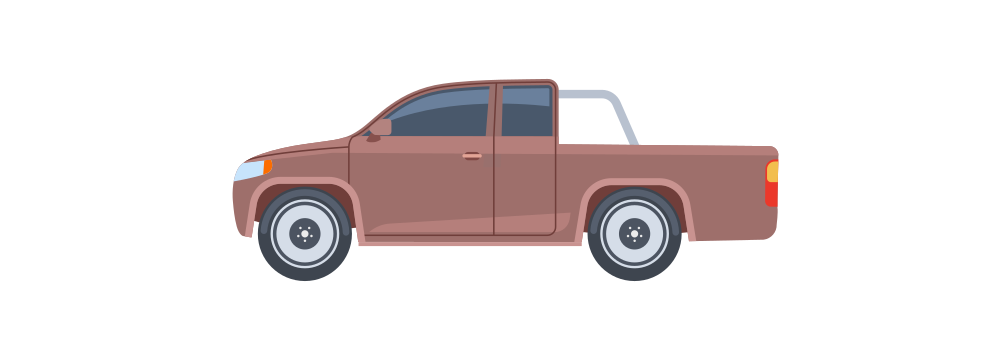
Expected average premium change: -13.7% or $297 per insured vehicle

Private passenger vehicles (PPVs) represent the largest vehicle class, covering approximately 3.1 million insured vehicles in Alberta. More than 88% of PPVs are expected to see premiums decrease under Care-First, with an average reduction of 13.7%. Because this is by far the largest class of vehicles, these reductions will benefit more Albertans than any other category.

How Different Drivers Are Affected

Vehicle type is only one factor that affects auto insurance premiums. The AIRB also analyzed how Care-First is expected to impact different driver profiles:

Profile

Change under Care-First

Young Men

-30.0%

Young Women

-27.6%

Middle-Aged Men

-15.1%

Middle-Aged Women

-13.2%

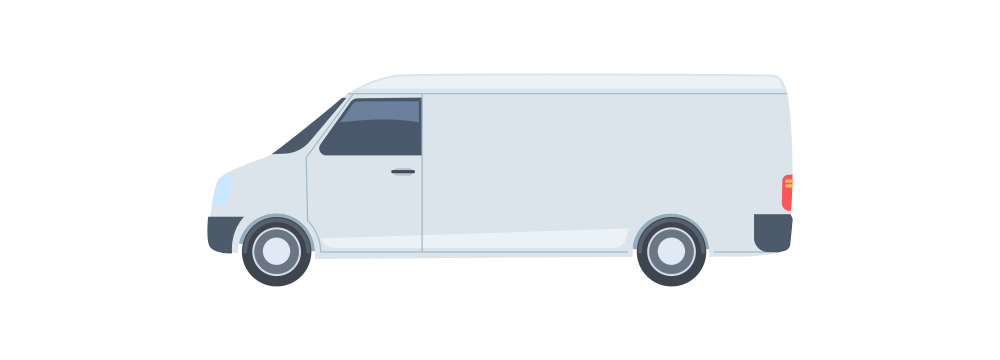
Commercial Vehicles
(Work Trucks, Cargo Vans and Other Commercial Vehicles)

Expected average premium change: -3.1%

This category is divided into two groups: commercial vehicles that primarily operate within Alberta and “interurban” vehicles – more commonly referred to as long-haul trucks – that travel longer distances and cross borders. Together, these vehicle types represent approximately 310,000 insured vehicles.

For commercial vehicles operating primarily within Alberta, 55.9% are expected to see premium reductions under Care-First, while 36.5% are expected to see increases and 7.7% will see no change. Most premium decreases are expected to fall between 5% and 10%. The AIRB notes that, by improving cost predictability and stability, Care-First will support the availability of commercial auto insurance coverage in Alberta.

Interurban Vehicles (Long-Haul Trucks)

Premiums are expected to increase for 81.3% of interurban vehicles, largely because of where they travel. While drivers of interurban vehicles, like other Alberta drivers, will benefit from reduced exposure to lawsuits within Alberta under Care-First, these vehicles also cross provincial and international borders. As a result, they remain exposed to lawsuits in other jurisdictions, particularly the United States.

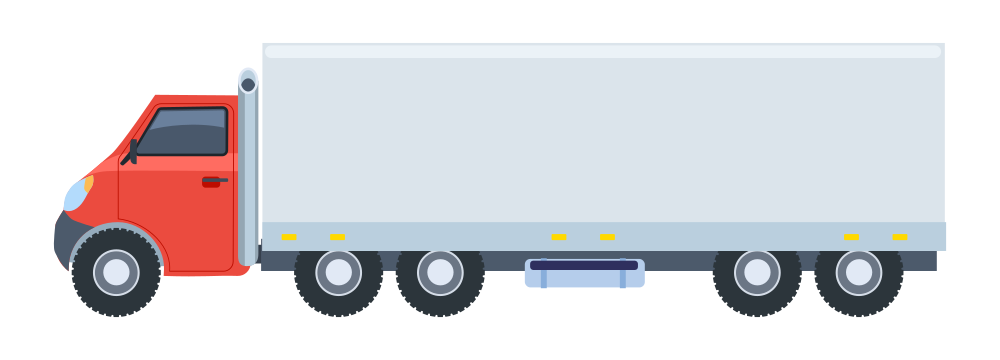
Interurban Vehicles
(Long-Haul Trucks)

Premiums are expected to increase for 81.3% of interurban vehicles, largely because of where they travel. While drivers of interurban vehicles, like other Alberta drivers, will benefit from reduced exposure to lawsuits within Alberta under Care-First, these vehicles also cross provincial and international borders. As a result, they remain exposed to lawsuits in other jurisdictions, particularly the United States.

Motorcycles and Mopeds

Expected average premium change: +100.1%

The motorcycle vehicle class (which includes mopeds) covers approximately 166,000 insured vehicles. Motorcycle premiums are expected to increase by an average of 100.1% under Care-First.

Today, motorcycle insurance premiums are driven largely by the cost of property damage and injury claims by other people involved in a collision with a motorcycle, which tend to be relatively low. As a result, motorcycle premiums in Alberta, prior to Care-First, are the lowest in the country, averaging $412 annually.

Under Care-First, recovery coverage will be provided by your own insurer and, as a result, premiums will more closely align with the expected cost of providing enhanced medical, rehabilitation and income replacement benefits for injured riders. Because motorcycle collisions are more likely to cause serious injuries to the rider, motorcyclists will, on average, see higher premiums.

Snow Vehicles

Expected average premium change: +12.5%

Snow vehicles (most commonly snowmobiles) account for approximately 58,000 insured vehicles in Alberta, a small percentage of total vehicles in the province. This class is expected to see modest premium increases under Care-First.

Under Care-First, premiums are more closely aligned with the expected cost of care and recovery benefits needed after a collision. Collisions involving snow vehicles can cause severe injuries to the rider, which will be reflected in the premiums under the new model.

However, snowmobile premiums are relatively low, averaging between $200 and $300 annually. As a result, the premium impact of Care-First is expected to be roughly $33 per policy.

All-Terrain and Off-Road Vehicles
(ATVs, Side-by-Sides and Other Off-Road Vehicles)

Expected average premium change: -24.2%

All-terrain vehicles (ATVs) and off-road vehicles represent approximately 164,000 insured vehicles in Alberta. While they make up a relatively small portion of Alberta’s insured vehicles, they can be a vital means of transportation in rural communities.

Premiums are expected to decrease for 94.8% of policies containing ATVs and off-road vehicles under Care-First. With an average premium reduction of 24.2%, this vehicle class is expected to see the largest percentage reduction in premiums of any class. Most decreases are expected to fall between 30% and 50%.

Antique and Collector Vehicles

Expected average premium change: +10.7%

Antique and collector vehicles account for approximately 55,000 insured vehicles in Alberta. Premiums are expected to increase for 96.8% of these policies under Care-First.

Antique and collector vehicles are often cheaper to insure because they are driven less than most private passenger vehicles. However, they also tend to lack the safety features found in modern cars. Under Care-First, premiums are more closely aligned with the expected cost of providing care and recovery after a collision, resulting in an average premium increase of 10.7% for this group.

While most policyholders are expected to pay more, the impact is relatively modest. The estimated average premium increase is approximately $41 per insured vehicle.

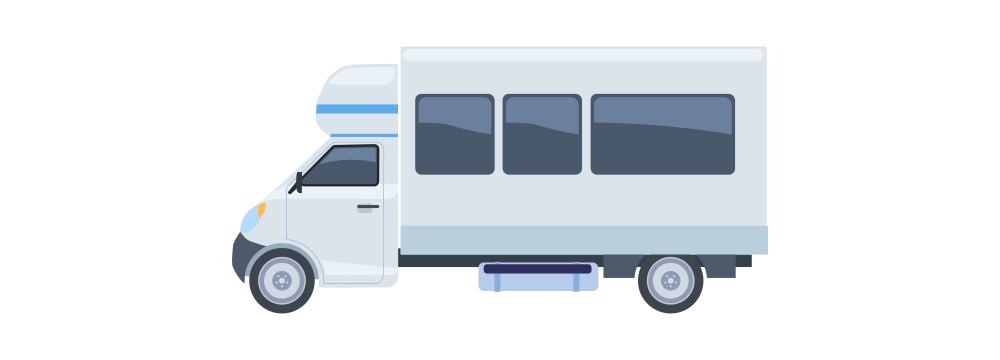
Motorhomes

Expected average premium change: -14.8%

Motorhomes account for approximately 30,000 insured vehicles in Alberta. Premium reductions are expected for 90.6% of these vehicles under Care-First, while none are expected to see premium increases.

An average premium reduction of 14.8%, or approximately $102 per insured vehicle, is expected.

Taxis and Limousines

Expected average premium change: -4.5%

Taxis and limousines included in the analysis account for approximately 969 insured vehicles, making this the smallest vehicle class studied. Premiums are expected to decrease for 63.7% of these insured vehicles under Care-First.

It is important to note that most taxis are insured through fleet policies, which were not included in the analysis. As a result, these findings are based on a relatively small portion of the overall taxi and limousine market.

While the projected premium reduction is modest at 4.5%, the AIRB notes that, by creating a more stable and sustainable insurance environment, Care-First could increase competition and improve access to coverage for taxi and limousine operators.

Better Auto Alberta